How I Made Games with AI as a Designer Who Can't Code
My full vibe-coding roadmap, from planning the first prompt to refining the design, gameplay, and sound, then connecting external services.
What AI did
Everything from implementing the first version of a game to editing the code. For things I didn't know how to do, such as connecting a domain or sign-in, it walked me through each step.
What I did as a designer in my sixth year of practice
Explained the game I wanted to make, refined the visuals and gameplay to suit my taste, and followed Astra's instructions to set up external services myself.
Here's the roadmap I put together after making these two games!
Where did I start, and how did I finish?
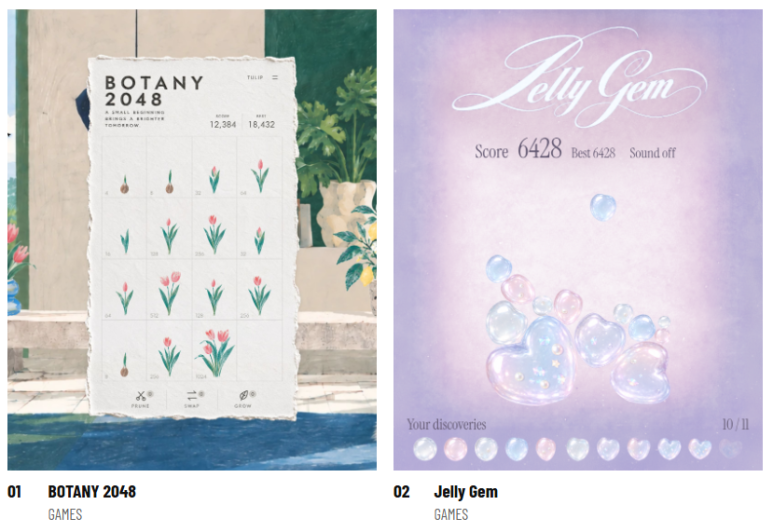
While writing the detailed development journals for Jelly Gem and Botany 2048, I thought it would help to first explain the overall order I worked in.
I'm a brand and graphic designer in my sixth year of practice, and I currently have almost no coding knowledge. I kept asking Astra about the development side as I went.
Broadly, the process looked like this:
Planning and organizing the prompt with ChatGPT → making the first version with Astra → refining the design, gameplay, and sound → connecting the domain and any necessary features.
01. What did I put in the first request?
First, I talked with ChatGPT about the game I had in mind in as much detail as I could.
How would it play? Why was I making it? What colors, textures, and overall style did I want? I organized that discussion into a prompt to give Astra.
By the time I was done talking, the prompt was almost as long as a thesis.
I'm not sure that's strictly necessary, though. Astra might do a good job with a simple request, too. That's something I'll have to try next time.
For this project, I started by talking through what I wanted to make and organizing it before getting started.
02. What did I change after the first version?
Once Astra built a first version from the prompt, I looked closely at the details and kept asking for changes.
I approached it in three broad stages: the visual style, the actual gameplay, and finally anything still missing.
First, I talked through and refined the screen until it matched the feeling I had in mind: the colors, textures, and shapes of the images. When necessary, I generated more images separately with ChatGPT or designed something myself and supplied it. For Jelly Gem's background, I generated the textures, typography, and other elements individually with ChatGPT, then combined them in Photoshop to finish it.
Next, I played the game myself and kept pointing out things that could work better. Something might look fine on screen, but once you actually play, the movement or speed can feel different from what you expected.
When it was close to what I wanted, I checked for anything missing, such as sound, and added it.
The sound took quite a bit of work, too. Getting a sound to play and getting the kind of sound I wanted turned out to be different things. I kept listening and asking for changes.
03. How did I connect a domain or Google sign-in?
Once a game was reasonably complete, I connected a domain and, where needed, features such as Google sign-in.
I had no background knowledge in this area either, so I kept asking Astra what I needed to do at each step.
It would tell me which website to open, what to click, and which value to enter where, and I'd follow the instructions.
At this point, I wasn't really using Astra as an agent that could take care of all of this while I stepped away. I did the setup and entered the information in the external services myself. I plan to gradually learn how to delegate more of that, too.
At first, there's a whole list of things you don't know. But you ask about one thing and try it, then move on to the next. As you work through what you need, one step at a time, suddenly it's finished. It still feels a little magical.
Did I need to understand everything before starting?
I certainly didn't know how to connect a domain or sign-in before I began. I asked when those things became necessary during development.
But I did have to keep looking at the results and deciding whether I liked them, and whether anything felt awkward when I played. Astra implemented things quickly, and my part was to check the result and make the next request.
I didn't need to study the entire production process before starting. By describing what I wanted in detail, checking the results myself, and asking about unfamiliar things when I needed them, I was able to finish projects one step at a time.
Originally published in Korean on September 28, 2026. English translation prepared October 1, 2026. Read the original on Naver.